Saturday, April 28, 2018

Rituals, Habits, & the Human Brain


We are beings of habit. Our successes and failures are contingent on the habits we make and those we break. We aren't only speaking of physical habits, like remembering to brush your teeth each night, but also habits of mind. I remember speaking to a counselor once who suggested one such habit to reverse my anxiety patterns. He said to seek out a regularly occurring sound in my environment. Every time I heard that sound, I should close my eyes and have a silent moment of stillness and peace. Eventually, my mind would automatically become relaxed on habit.

It's easy to see the rituals, feasts, ceremonies, and regular sacrifices in the Bible as facets of an ancient world separate from our own. Some will state that they were only for remembrance of God and how He walked with His people in the past, present, and how He will walk with us in the future. That's only partly true. I'm convinced that they were also created to create a habit of mind.

"How do your voluminous sacrifices benefit me?" the LORD is asking. "I've had enough of burnt offerings of rams and the fat of well-fed beasts. I don't enjoy the blood of bulls and lambs and goats. When you come to appear before me, who has asked this of you, this trampling of my courts? Stop bringing useless offerings! Incense is detestable to me, as are your New Moons, Sabbaths, and calling of convocations. I cannot stand iniquity within a solemn assembly. As for your New Moons and your appointed festivals, I abhor them. They've become a burden to me; I've grown weary of carrying that burden. When you spread out your hands in prayer, I'll hide my eyes from you. Even though you pray repeatedly, I won't listen. Your hands are full of blood, your fingers drenched with iniquity." Isaiah 1:11-15

"For the Law, since it has only a shadow of the good things to come and not the very form of things, can never, by the same sacrifices which they offer continually year by year, make perfect those who draw near. Otherwise, would they not have ceased to be offered, because the worshipers, having once been cleansed, would no longer have had consciousness of sins? But in those sacrifices there is a reminder of sins year by year." Hebrews 10:1-3
On the one hand, the Israelites were being constantly reminded of their past sins so they weren't doomed to repeat history. On the other hand, God didn't want empty rituals done by mechanical repetition. They were made to make people more conscious not less. They were a type of meditation. Better yet, these rituals were like mental practice for greater things.

One source states:

"People tend to think that what differentiates religious people from their secular counterparts is that they believe different things. But that is less than half the story. People in most religions behave distinctively. They engage in ritual. They do certain things like praying, over and over again. Ritual is the religious equivalent of “deep practice.”

We can now understand why. Constant practice creates new neural pathways. It makes certain forms of behaviour instinctive. It reconfigures our character so that we are no longer the people we once were. We have, engraved into our instincts the way certain strokes are engraved in the minds of tennis champions, specific responses to circumstance. Prayer engenders gratitude. Daily charitable giving makes us generous. The “thou shalt not’s” of religion teach us self control. Ritual changes the world by changing us.

This would not have surprised Aristotle or Maimonides because that is how they believed virtue is acquired, by constantly repeating virtuous acts. “Habit becomes second nature,” as the medieval thinkers put it. That does not mean that genes have no part to play. I think I always knew that with my height and lack of body coordination I was not destined to be a basketball champion. But neither talent nor virtue is determined by the lottery of birth. Hard work beats lazy genius every time.

Far from being outmoded, religious ritual turns out to be deeply in tune with the new neuroscience of human talent, personality and the plasticity of the brain. The great faiths never forgot what science is helping us rediscover: that ritual creates new habits of the heart that can lift us to unexpected greatness." (rabbisacks)
We may no longer do the same rituals or have to sacrifice lambs for our sins (since the great Lamb Jesus did the last and most meaningful sacrifice). However, as Christians, we should implement ritual to our everyday routine in order to ingrain the habits we want to sustain in the name of God.

People don't wake up after baptism being excellent disciples. We are what we do repeatedly. Start somewhere. Donate, practice empathy in your next interaction, read the Bible, set an alarm at a certain time daily and do something for someone else. Research says it takes twenty-one days for a habit to form. It will literally change your mind.

Let's practice being disciples together and amaze the world with God's greatness. Even if we fail most days, look at all the good we could do in the meantime!


Sources other than Bible:
https://bible.org/seriespage/lesson-13-ritual-versus-reality-romans-225-29
http://rabbisacks.org/credo-ritual-develops-habits-that-can-lift-us-to-greatness/

Saturday, April 21, 2018

Finally, Be Strong


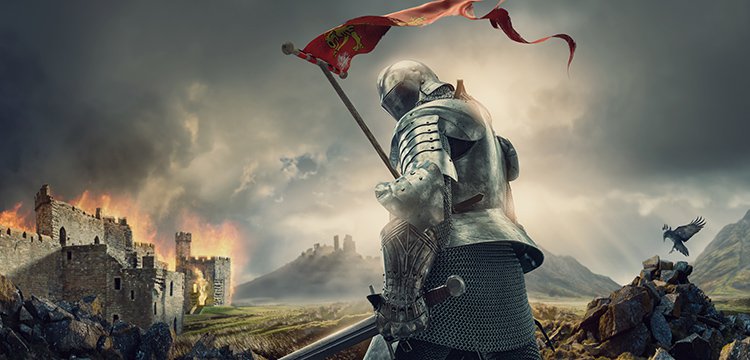
Many of us in Western countries are blessed in that we can worship freely with little to no oppression. However, that doesn't mean it's easy to stand firm and proud for what we believe in, and we can face backlash and even hatred for our principles. As many of you know, you need to put on the armor of God.

"Finally, be strong in the Lord and in his mighty power. Put on the full armor of God, so that you can take your stand against the devil’s schemes. For our struggle is not against flesh and blood, but against the rulers, against the authorities, against the powers of this dark world and against the spiritual forces of evil in the heavenly realms. Therefore put on the full armor of God, so that when the day of evil comes, you may be able to stand your ground, and after you have done everything, to stand. Stand firm then, with the belt of truth buckled around your waist, with the breastplate of righteousness in place, and with your feet fitted with the readiness that comes from the gospel of peace. In addition to all this, take up the shield of faith, with which you can extinguish all the flaming arrows of the evil one. Take the helmet of salvation and the sword of the Spirit, which is the word of God.

And pray in the Spirit on all occasions with all kinds of prayers and requests. With this in mind, be alert and always keep on praying for all the Lord’s people." Ephesians 6:10-18


Let's break this apart, shall we? Paul wrote the book of Ephesians from a Roman prison in Ephesus, waiting for his trial in front of Caesar. His ministry had been so successful that the silversmiths were losing money with all the people that stopped buying idols and worshiping Artemis. He left to Jerusalem but was arrested there. We know the outcome of his trial was execution.

Needless to say, Paul knew first-hand what it was to stand firm in his faith while facing death.

When speaking of the armor of God, he describes several pieces of armor and weaponry common for Roman soldiers to equip. In fact, it seems the verse goes in order to how a soldier would've put those pieces on his body.

Belt of Truth - First thing equipped and used to hold everything in place, both the rest of his armor/equipment but also to hold extras he may need like money or food. Without the Word of God and His truth, everything else we do will fall apart.

Breastplate of Righteousness - Resting on and attached directly to the belt, the breastplate protects the heart. Living our lives in God's way of love will protect us from temptations and harm to our hearts.

Feet fitted with Readiness - A Roman soldier had footwear with spikes in the heel, to better grip, balance, and well to defend themselves with! We need to stand ready and steady to deal with whatever may come our way, eyes wide open.

Shield of Faith - Roman shields were long, spanning from chin to knees. When under great attack, many soldiers together would hunch down together and combine shields to protect themselves and their fellow soldiers until they were able to, as a group, make the next move. Our faith and trust in God will protect us from the fiery arrows of the world, and when we combine our forces to protect each other with encouragement and trust in God, we're unstoppable.

Helmet of Salvation - Many nations had leather or bone helmets, but the Romans wore bronze or iron helmets, almost impervious to attack. As children of God, we are saved, which means many things, but one the biggest things it means is that the Holy Spirit now lives within us to help us direct our ways. With the Holy Spirit, our minds are protected from worldly attacks, trying to sway our minds into paths of darkness and doubt.

Sword of Spirit - A Roman soldier had a few types of swords, one of which was a two-edged sword. The Word of God, the Holy Spirit, while it protects, also cuts through the darkness, getting straight to the truth of the matter. If God is with us, who can be against us?

Something else to remember is this:
"Therefore put on the full armor of God, so that when the day of evil comes, you may be able to stand your ground, and after you have done everything, to stand."
Put on the armor first, prepare. The soldier doesn't arm him or herself in the middle of a battlefield. They put it on before they step out. Find a way to put on your armor daily before doing anything else, so that you will be prepared for whatever comes your way.

One way of doing this is prayer, which Paul actually addresses. It brings us back to God's perspective, our faith in Him, and is a type of meditation to calm us at the start of day. You can also start the day with Bible reading. Don't sigh. You don't have to read a whole book to make this effective. Simply, read a daily verse like those through the Bible app. Like prayer, it centers us back onto the right path. You can journal, draw, run while contemplating God, etc. You do you. Just find a way to equip yourself.

How do you put on the armor of God each day? Comment with your own ideas, and as always, love y'all!


Sources other than Bible:
http://www.christianarsenal.com/Christian_Arsenal/Full_Armor_of_God.html
http://www.truthnet.org/Spiritual-warfare/6BackgroundArmor-God/Armor-of-God.htm

Saturday, March 31, 2018

Blood & Water


I hope you get more out of this weekend than bunnies and chocolate eggs. I hope you take more than a moment to recognize that what you're celebrating is bittersweet.

As you may be aware, Jesus was in an exceptional amount of torment, physically and mentally, during his crucifixion. However, when the legionnaire lanced Him through the side (to ensure He died), blood and water came out. Medically, that means:

"- there was an escape of water fluid from the sac surrounding the heart, giving postmortem evidence that Our Lord died not the usual crucifixion death by suffocation, but of heart failure (a broken heart) due to shock and constriction of the heart by fluid in the pericardium." (CBN)

He died of a symbolically broken heart because of our sins.

Unlike Christmas's proximity to His possible birth, Easter Sunday is probably very close to when Jesus actually died on the cross. Jesus was crucified on the eve of Passover,which lasts seven days. He rose around Saturday night just as the weekly Sabbath ended. Let's see how the Passover was a sign of God's promise and yearly reminder of a savior He'd send to His people.

Long ago, in the Old Testament, Jews were enslaved by the Egyptians (much like God's children are enslaved by the evils of this world before they're saved). God sent a plague that ravaged Egypt, killing every first born except for those who smeared lamb's blood on their doorways (the lamb symbolizing Jesus, of course). Those same families would be gathering inside their safe homes and eating the very first Passover meal, which was rife with symbols of both bitter times, mourning, and finally hope and renewal. It was a way to remember the past, put it behind them, and move on to a brighter future.

The next day, the Jews left Egypt en masse. After three days, the Pharaoh realized that they weren't returning from their religious holiday and began to pursue them. It wasn't long after that the Hebrews passed onto the other side of the parted Red Sea, not allowing their pursuers to follow them.Many years later, Jesus rose from His grave and saved His people from their own spiritual pursuers.

Forty years after they fled Egypt, the Jews crossed the Jordan River to enter into God's Promised Land. This is the same river in which Jesus was baptized.

Please have a good weekend, but remember God's great love for you, how He'd die for you, and most importantly how He lives again for you.

Many blessings.


Sources other than Bible:
https://www1.cbn.com/medical-view-of-the-crucifixion-of-jesus-christ
https://www.ucg.org/the-good-news/jesus-wasnt-crucified-on-friday-or-resurrected-on-sunday-how-long-was-jesus-in-the

Saturday, February 17, 2018

We the Priests, the Warriors


This world can be full of troubles, death, and darkness. Most of us have felt helpless at some point in the face of the overwhelming atrocities.

As Christians, we are unique in that God has called upon us to be the light in this darkness, to be a source of hope in the midst of hopelessness.The unbelievers are annoyed by our constant replies that we will send "thoughts and prayers" to victims every time something occurs, yet nothing is put into action or changed to prevent the evil from occurring again. Of course they are! Don't automatically put up a wall when you hear the outpouring of anger against us when you can find wisdom in their words. Put your love of God above your pride and listen. Of course we must pray, pray always and without ceasing. However, we are called to be God's hands and feet, used by Him to lead the world to His way of love.

So, what can we do? How exactly can we accomplish that?

There's a popular, albeit fictional, story of an atheist professor who attempted to shame the believers in his classroom by calling into question the logic of a purely good God. He stated that if good and bad exist, and God created everything, then God created bad and is, therefore, not purely good. Without posting the story in its entirely, a student stood up and turned the questions around in order to show that, in the same manner that darknessand coldness does not exist in themselves but are the absence of light and heat, so too, evil is simply the absence of good and, therefore, God.

We are called to bring light and warmth to a dark and cold world. Anytime, there's a question of how, we can look to the Bible.

"But you are a chosen people, a royal priesthood, a holy nation, a people to be his very own and to proclaim the wonderful deeds of the one who called you out of darkness into his marvelous light. Once you were not a people, but now you are the people of God. Once you had not received mercy, but now you have received mercy. Dear friends, I urge you as aliens and exiles to keep on abstaining from the desires of the flesh that wage war against the soul. Continue to live such upright lives among the gentiles that, when they slander you as practicers of evil, they may see your good actions and glorify God when he visits them. " 1 Peter 2:8

You are a priest, and what did priests do? They lived their lives as examples of joy, love, and truth, as we are called to be examples to the world. They were those who had direct access to God and His messages, and they were responsible for announcing those messages to all those who would hear, as we are called to spread the gospel. They made sacrifices that appealed to God for others' sins and praised Him for their blessings, as we do when we pray. There's something else they did:

They separated the clean and unclean, the diseased from the healthy. If someone was diagnosed with a contagious disease, that person was quarantined away from everyone until he or she was declared no longer contagious. If someone was unclean for some reason or another, that person was made to stay outside of the encampment to keep from spreading diseases or making the clean unclean. Not to mention that the punishments for those who committed crimes against others were harsh and immediate.

What does this mean for us? We are called, as a holy people, to discern the unhealthy and unclean and push for the powers-that-be to separate them from the rest of us. If those who are unhealthy purposely harm others, we are called to push for the powers-that-be to punish those criminals.

You are a warrior, and what do warriors do? They do not rest in apathy. If you are a Christian, you are called into action as a priestly warrior of God. We all know the verse about the full armor of God:
"Finally, be strong in the Lord and in his mighty power. Put on the full armor of God, so that you can take your stand against the devil’s schemes.For our struggle is not against flesh and blood, but against the rulers, against the authorities, against the powers of this dark world and against the spiritual forces of evil in the heavenly realms. Therefore put on the full armor of God, so that when the day of evil comes, you may be able to stand your ground, and after you have done everything, to stand. Stand firm then, with the belt of truth buckled around your waist, with the breastplate of righteousness in place, and with your feet fitted with the readiness that comes from the gospel of peace. In addition to all this, take up the shield of faith, with which you can extinguish all the flaming arrows of the evil one. Take the helmet of salvation and the sword of the Spirit, which is the word of God.

And pray in the Spirit on all occasions with all kinds of prayers and requests. With this in mind, be alert and always keep on praying for all the Lord’s people." Ephesians 6:10-18

Another thing to remember is that we are all made gloriously different with varying points of view. What a shame if we didn't have the strength to see different dimensions and solutions to problems! Let us come together as brothers and sisters and not fight amongst ourselves, but hear each the other's opinions, so that we can find a way to shed God's light and love into the confused, blind, and horrified world.

And also, always, always pray.


Saturday, February 3, 2018

Painting the Backdrop of Jesus


Many people assume details about the world surrounding Jesus and other Biblical figures. It's common to acknowledge they dressed funny, spoke another language, and wore long beards and/or hair. However, there's much, much more we might overlook.

First, we'll start with where Jesus grew up. He lived in Nazareth, a village in the Galilee. According to archaeological evidence, Nazareth was certainly a small village, but it stood on the edges of a thriving urban city, Sepphoris. In that time, the major cities, especially, were inundated with the Greek and Roman lifestyle: various forms of entertainment like theatres and amphitheaters, etc despite the fact it was a Jewish city. Jesus was raised between the ancient Hebrew world and the newer Greek/Roman world. He even possibly spoke a few languages (Hebrew, Aramaic - the everyday language, and Latin) as it was common for Jews to use all three.

Yet, he never really speaks in the New Testament like an urbanite. Also, interestingly, He never mentions (in the Bible) Sepphoris despite how close it existed to His home.

His family trade is typically seen as carpentry, but the Greek word used is "tectone," which simply means something close to artisan or craftsperson. Even farmers were higher class than an artisan. Those farmers who were forced from their lands might become an artisan in order to get by. Peasants typically disliked cities due to both social status and Jewish-Roman tensions. Yet, He uses the words and images of a peasant farmer (Nazareth was a farming village), someone very in tune with the earth and nature around Him.

He appears to avoid major cities in His travels. Landowners, government officials, judges, and other wealthy people lived in cities, with the countryside reserved for the poor. Maybe He preferred small towns and the countryside, or perhaps He found the peasants to be more willing to listen to His message.

A couple sources speak of what you'd expect to see walking down the streets of a town:

"Tradesmen would be instantly recognizable by the symbols they wore. Carpenters stuck wood chips behind their ears, tailors stuck needles in their tunics, and dyers wore colored rags. On the Sabbath, these symbols were left at home." (Christianitytoday)

"Houses were all-purpose 1-2 room squares, with dirt floors, flat roofs, low and narrow doorways, and front wooden doors. Often people would sleep on flat roofs during hot nights. The houses were arranged around a central shared courtyard where neighbors performed daily chores (cooking, laundry, etc.) in each other’s company. Water was carried in from a public well and stored in a courtyard cistern. Lighting was provided by earthenware oil lamps. People slept on mats, and owned limited personal goods." (JesusCentral)

Everyone became just people on the Sabbath. They ate two main meals a day with bread being the center point of both. Common places to meet up with others, beside in the courtyard, were the marketplace and the temple. During major feast days, they'd travel to Jerusalem if they could, where the population would swell from about 55,000 to 180,000. It was a bit crowded.

Children were children as always, and archeologists have found "whistles, rattles, toy animals on wheels, hoops, and spinning tops" with the occasional board game, such as a version of checkers. There were few portraits or images of living beings, as this was forbidden in Jewish culture (which is also the reason you won't find a drawing of Jesus). The only exception being dolls for children.

It's interesting, and sometimes helpful, to put context to Jesus' message. With the details on the down-to-earth lifestyle of the Jews in His time, we can more clearly see Him walk the streets spreading love. As I find more information, I'll share so we can fully paint the backdrop of Jesus.


Sources other than Bible:
https://www.pbs.org/wgbh/pages/frontline/shows/religion/jesus/socialclass.html
https://www.npr.org/templates/story/story.php?storyId=125394814
http://www.christianitytoday.com/history/issues/issue-59/life-times-of-jesus-of-nazareth-did-you-know.html
http://www.jesuscentral.com/ji/historical-jesus/jesus-firstcenturycontext.php

Saturday, January 6, 2018

New Year: God's Resolution


"And the One seated on the throne said, 'Behold, I make all things new.'" Revelation 21:5

A new year promises new beginnings, and urges us all to look to the future with hope and sometimes a little fear of the unknown. We make resolutions to help us create a better life. Did you know God has His own resolutions?

"And I heard a loud voice from the throne saying:

“Behold, the dwelling place of God is with man,
and He will live with them.
They will be His people,
and God Himself will be with them as their God.
He will wipe away every tear from their eyes,
and there will be no more death
or mourning or crying or pain,
for the former things have passed away.” Revelation 21:3-4

"Then He said, “Write this down, for these words are faithful and true.” And He told me, “It is done! I am the Alpha and the Omega, the Beginning and the End. To the thirsty I will give freely from the spring of the water of life. The one who is victorious will inherit all things, and I will be his God, and he will be My son." Revelation 21:5-7

Once upon a time, when I was a child, I took it upon myself to "attempt" to read the Bible all the way through. I half-way succeeded (literally only the Old Testament) and then skipped to Revelations. What a horrible idea! I read things like:

"And I looked, and behold a pale horse: and his name that sat on him was Death, and Hell followed with him. And power was given unto them over the fourth part of the earth, to kill with sword, and with hunger, and with death, and with the beasts of the earth." Revelations 6:8

And -

"And I beheld when he had opened the sixth seal, and, lo, there was a great earthquake; and the sun became black as sackcloth of hair, and the moon became as blood; And the stars of heaven fell unto the earth, even as a fig tree casteth her untimely figs, when she is shaken of a mighty wind. And the heaven departed as a scroll when it is rolled together; and every mountain and island were moved out of their places." Revelations 6:12-14

Well then. So, basically Revelations used to be like a horror film to me, full of blood and gore and hopelessness.

I HAD MISSED GOD'S PROMISES AND HOPE. I only caught on to his anger and deep sadness over the darkness of the world.

So, later, armed with greater reading comprehension and knowledge of how to research and dissect literature, I faced the Bible once again. I started at the beginning, when the world held such hope, mourned the loss of innocence, and struggled alongside the prophets, laymen, families, and God as I made my way back through the Old Testament.

Malachi.

This is the last book of the Old Testament, written by the minor prophet... Malachi, of course.

"Behold, I am going to send My messenger, and he will clear the way before Me And the Lord, whom you seek, will suddenly come to His temple; and the messenger of the covenant, in whom you delight, behold, He is coming," says the LORD of hosts." Malachi 3:1

"See, I will send my messenger…For he will be like a refiner’s fire... He will sit as a refiner and purifier of silver and the offerings of Judah and Jerusalem will be acceptable to the Lord, as in days gone by, as in former years." Malachi 3:1-4
Malachi spoke of hope. Hope that the Israelites lived on for 400 years.

Then, I finally opened the New Testament.

"In the beginning was the Word, and the Word was with God, and the Word was God. He was with God in the beginning. Through Him all things were made, and without Him nothing was made that has been made. In Him was life, and that life was the light of men. The Light shines in the darkness, and the darkness has not overcome it." John 1:1-5

The darkness has not overcome it. After all the pain, turmoil, doubt, and silence that the Old Testament addressed, it also spoke of unrelenting faith, everlasting love for others and God for His people, and the pinprick of light that still existed far toward the end of the tunnel. Yet, after all this, that spot of light remained and only grew stronger in the world.

Through the books of the New Testament, I walked with Jesus and His disciples speaking of the love of God and His children and the hope that sinners had in Him. The darkness had not overcome the light, but the light would overcome the darkness. Though life was never easy or fair for Jesus or His followers, they grew from a handful to innumerable as the stars. I remember a resolution God had made back in the beginning.

"He took him outside and said, "Look up at the sky and count the stars--if indeed you can count them." Then he said to him, "So shall your offspring be." Genesis 15:5
Did you think God was speaking to Abraham of his future blood relatives back then? Abraham probably did too.
"And if you belong to Christ, then you are Abraham's descendants, heirs according to promise." Galatians 3:29

You are one of those stars He spoke of so long ago.

When God makes promises and resolutions, He not only follows through but brings them to fruition above our very expectations and dreams.

So, when I finally made it back to Revelations, I read it with different eyes, filled with new hope. There would be terrible things in store for the world. This much was still true. But, did you not realize that we, the beloved children of God, are not the world? We may have to suffer through much, but haven't we already through history? One thing remained the same: God stands by our side and faces it alongside us.

"The LORD is my light and my salvation— whom shall I fear? The LORD is the stronghold of my life— of whom shall I be afraid?" Psalm 27:1

"For I am the LORD your God who takes hold of your right hand and says to you, Do not fear; I will help you." Isaiah 41:13

"Cast all your anxiety on him because he cares for you." 1 Peter 5:7

"Not only so, but we also glory in our sufferings, because we know that suffering produces perseverance; perseverance, character; and character, hope. And hope does not put us to shame, because God’s love has been poured out into our hearts through the Holy Spirit, who has been given to us." Romans 5:3-5

"Now if we are children, then we are heirs—heirs of God and co-heirs with Christ, if indeed we share in his sufferings in order that we may also share in his glory. I consider that our present sufferings are not worth comparing with the glory that will be revealed in us." Romans 8:17-18

This new year, remember God has His own resolutions, and they involve you.

"For I know the plans I have for you," declares the LORD, "plans to prosper you and not to harm you, plans to give you hope and a future." Jeremiah 29:11

Happy New Year to all; your future is bright.

***

Other Bible quotes about God making all things new:

"Therefore if anyone is in Christ, he is a new creature; the old things passed away; behold, new things have come." 2 Corinthians 5:17

"Remember not the former things,
nor consider the things of old.
Behold, I am doing a new thing;
now it springs forth, do you not perceive it?
I will make a way in the wilderness
and rivers in the desert." Isaiah 45:18-19

"For behold, I create new heavens
and a new earth,
and the former things shall not be remembered
or come into mind.
But be glad and rejoice forever
in that which I create;
for behold, I create Jerusalem to be a joy,
and her people to be a gladness." Isaiah 65:17-18


Saturday, December 23, 2017

Christmas: Light After Darkness


"After they had heard the king, they went on their way, and the star they had seen when it rose went ahead of them until it stopped over the place where the child was. When they saw the star, they were overjoyed. On coming to the house, they saw the child with his mother Mary, and they bowed down and worshiped him. Then they opened their treasures and presented him with gifts of gold, frankincense and myrrh." Matthew 2:9-11

Winter Solstice is an astronomical event, marking the longest night of the year, and it usually occurs between December 21-23.

Just before Jesus was born, the Israelites experienced a long night themselves, held up only by faith in God's promises to bring them a King. The period between Malachi and the Messiah was known as the "400 years of silence," during which time there were no prophets and God did not speak to the Jewish people. They remembered the prophecies of old:
“Therefore the Lord himself will give you a sign: The virgin will be with child and will give birth to a son, and will call him Immanuel.” Isaiah 7:14

“For to us a child is born, to us a son is given, and the government will be on his shoulders. And he will be called Wonderful Counselor, Mighty God, Everlasting Father, Prince of Peace.” Isaiah 9:6

“But you, Bethlehem Ephrathah, though you are small among the clans of Judah, out of you will come for me one who will be ruler over Israel, whose origins are from of old, from ancient times.” Micah 5:2

“Rejoice greatly, O Daughter of Zion! Shout, Daughter of Jerusalem! See, your king comes to you, righteous and having salvation, gentle and riding on a donkey, on a colt, the foal of a donkey.” Zechariah 9:9

Then, a light came out after that long night, and the silence was broken forever.

Like a man stumbling out of a dark room into the bright sunlight, when Jesus was born, many were blind to the fact their King had finally arrived.

"-the people living in darkness have seen a great light; on those living in the land of the shadow of death a light has dawned." Matthew 4:16

"When Jesus spoke again to the people, he said, 'I am the light of the world. Whoever follows me will never walk in darkness, but will have a light of life." John 8:12

It's interesting to note that Hanukkah, the festival of light celebrated by Jews, is followed by the darkest period of the year. This is followed by Christmas, a celebration of Jesus' birth. In the same way, the Jews rejoiced in God's light, which lasted in faith throughout a silent time of darkness, before Jesus came to Earth to be the light to even the gentiles.

Will you celebrate the light this season? Will you remember to be the light for others all year around?

Merry Christmas and may your homes be filled with light, love, and joy.


Sources other than Bible:
https://www.gotquestions.org/400-years-of-silence.html